Feature · Fun read

Retro Futures: how the past imagined today

For 50 years, writers, filmmakers and tech visionaries tried to picture the world we live in now. We gathered 46 of their best predictions, from space hotels to self-lacing shoes, and scored every one against the real 2026. Some were spookily right. Some were gloriously wrong. And flying cars are still "coming soon".

Retro-futuristic city with flying cars, a monorail and a space-age tower at sunset

The scoreboard

Every prediction gets one of four verdicts. Use the buttons to show just the hits or just the misses. Think we got a verdict wrong? Vote 👍 or 👎 on any card, and tell us why in the comments.

Nova says

I'm literally a space cat, and even I don't have a flying car. Think we got a verdict wrong? Hit 👍 or 👎 on any card!

17🎯 Nailed it: happened, more or less as described
15👌 Close-ish: right idea, wrong details or date
11🤦 Way off: didn't happen, or went very differently
3⏳ Jury's out: not yet, but still in progress
Prequel · The space-age dream
1968

Before we start the decade-by-decade tour, one film set the bar for every prediction that followed. 2001: A Space Odyssey (1968) imagined the year 2001 in careful, NASA-consulted detail. Here's how it scores from 2026.

2001: A Space OdysseyFilm & novel · 1968, set in 2001🎯 Nailed it

Flat tablets for watching the news

Then: Astronauts eat breakfast while watching the news on thin, flat screens. Clarke's novel calls the device a "Newspad".

Now: Tablets arrived in 2010, and today they're mostly used for watching videos while eating.

Kubrick even predicted the screen at the dinner table.

2001: A Space OdysseyFilm & novel · 1968👌 Close-ish

HAL 9000, the calm talking computer

Then: HAL chats, plays chess, reads lips and, famously, refuses to open the pod bay doors.

Now: Conversational AI assistants like Claude arrived about two decades late, and they're designed from the start to be helpful and stay under human oversight.

We got the conversation, and we're very deliberately skipping the "I'm sorry, Dave" part.

2001: A Space OdysseyFilm & novel · 1968🤦 Way off

Pan Am flights to a space hotel

Then: A Pan Am space plane shuttles ordinary travellers to a giant spinning space station, complete with a Hilton.

Now: Pan Am went out of business in 1991. A handful of tourists have reached space, for millions of dollars each and with no in-flight meal service.

The only thing still orbiting Pan Am is nostalgia merch.

Space colonies, oil shocks and a lot of brown
1970s

The 1970s future was big, optimistic and orange. Scientists sketched cities in orbit, while Hollywood mostly predicted overpopulation, pollution and corporate overlords. Some of it landed with unnerving accuracy.

Arthur C. ClarkeABC TV interview · 1974🎯 Nailed it

A computer on every desk

Then: Standing among room-sized mainframes, Clarke told a reporter that by 2001 his young son would have a compact console at home for "all the information he needs", from bank statements to theatre bookings. He added that people could work from anywhere.

Now: Home PCs arrived in the '80s, online banking in the '90s, and remote work went mainstream in 2020.

He called online banking and working from home while computers still filled whole rooms.

Alvin TofflerBook · Future Shock, 1970🎯 Nailed it

Information overload

Then: Toffler warned that too much change, arriving too fast, would leave people stressed and disoriented, and he popularised the phrase "information overload".

Now: In 2026 the average phone buzzes with dozens of notifications a day.

Toffler warned us in 1970. We saw it as a push notification and swiped it away.

NASA & Stanford summer studyResearch · 1975⏳ Jury's out

Leafy suburbs floating in space

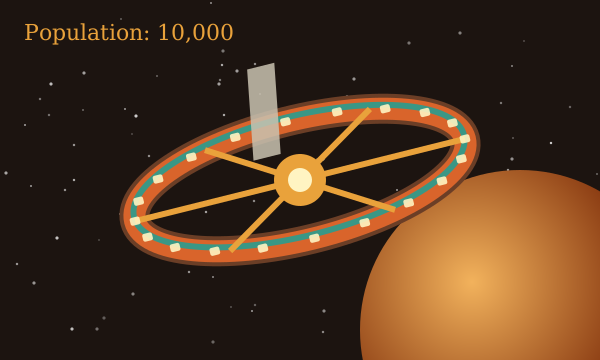
Then: Scientists designed the "Stanford torus", a spinning ring in orbit housing 10,000 people with farms, lakes and neighbourhoods. Gerard O'Neill's The High Frontier (1976) expected colonies like it within decades.

Now: The International Space Station usually hosts about seven people.

We ordered a leafy suburb for 10,000 and got a flat-share for seven with no showers.

BusinessWeekMagazine · "The Office of the Future", 1975👌 Close-ish

The paperless office

Then: Computers would soon make paper files and filing cabinets obsolete.

Now: Most documents are now digital, yet office printers still jam at the worst possible moment.

Half right: the paper is mostly gone, but the printer drama is eternal.

Soylent GreenFilm · 1973, set in 2022🤦 Way off

A crowded, starving 2022

Then: New York has 40 million people crammed into it, real food is a luxury, and everyone lives on mysterious corporate rations.

Now: New York has about 8.5 million people and more food-delivery apps than anyone needs. The film's permanent heatwave, sadly, is ageing better.

In the real 2022, the trendiest green food was matcha. We checked the ingredients.

RollerballFilm · 1975, set in 2018👌 Close-ish

Corporations rule, and a brutal sport rules TV

Then: Nations have been replaced by corporations, and the world is glued to a violent roller-skating game.

Now: Governments still exist and roller derby stayed niche. But esports now fill arenas, and the biggest tech companies are worth more than most countries' entire economies.

Swap the roller skates for gaming chairs and it's uncomfortably close.

Neon, chrome and flying cars (any minute now)
1980s

The '80s future had synthesisers, sunglasses at night and a flying car in every driveway. It also gave us the most-quoted prediction film of all time, Back to the Future Part II, whose "future" date of 21 October 2015 is now more than a decade behind us.

Back to the Future Part IIFilm · 1989, set 21 Oct 2015🎯 Nailed it

Video calls on the living-room TV

Then: Marty's future self gets fired by his boss over a video call on a wall-sized flat screen.

Now: Video calls are how many of us now get hired (and, yes, fired).

They even predicted the awkward pause before everyone says "you're on mute".

Back to the Future Part IIFilm · 1989🎯 Nailed it

Self-lacing sneakers

Then: Marty's high-tops tighten themselves with a satisfying whirr.

Now: Nike released real self-lacing shoes in 2016: the HyperAdapt, plus a very limited run of Marty-style Mags.

One year late, which in time-travel terms is basically on time.

Back to the Future Part IIFilm · 1989👌 Close-ish

The Chicago Cubs win the World Series

Then: A news screen in 2015 celebrates a Cubs World Series victory, a running joke about a team that hadn't won since 1908.

Now: The Cubs won the World Series in 2016.

Off by one year, after 108 years of heartbreak. We'll allow it.

Back to the Future Part IIFilm · 1989🤦 Way off

Hoverboards and flying cars

Then: Kids float on hoverboards and cars cruise along skyways.

Now: The 2015 "hoverboards" had wheels, and enough of them caught fire to trigger mass recalls. Commercial flying taxis are only just launching in 2026, in Dubai.

The only thing hovering in 2015 was a battery recall notice.

Back to the Future Part IIFilm · 1989🤦 Way off

A fax machine in every room

Then: The McFly house has fax machines everywhere, and Marty's firing notice arrives by fax, in several rooms at once.

Now: Fax survives mainly in hospitals and government offices.

Accidentally the most accurate prediction of healthcare IT ever made.

Blade RunnerFilm · 1982, set Nov 2019🎯 Nailed it

Skyscraper-sized video ads

Then: Giant video billboards loom over rain-soaked city streets.

Now: Times Square, Tokyo's Shibuya and the Las Vegas Sphere look like they took notes.

The billboards advertised Pan Am and Atari. The brand curse is real.

Blade RunnerFilm · 1982👌 Close-ish

Voice-controlled "Enhance!"

Then: Deckard talks to a machine that zooms deep into a photo to reveal hidden details.

Now: AI upscaling is real and voice commands are everywhere, but AI "enhance" can invent details that were never in the photo.

Great for holiday snaps. Terrible for evidence.

The Running ManFilm · 1987, set in 2017🎯 Nailed it

Deadly reality TV and faked video

Then: A game show hunts contestants for ratings, and the producers fake footage to fool the audience.

Now: Reality TV took over, thankfully without the lethal part. And in 2017, the year the film is set, the word "deepfake" first appeared online.

Possibly the most accurate date in sci-fi history, and entirely by accident.

William GibsonNovel · Neuromancer, 1984🎯 Nailed it

Cyberspace

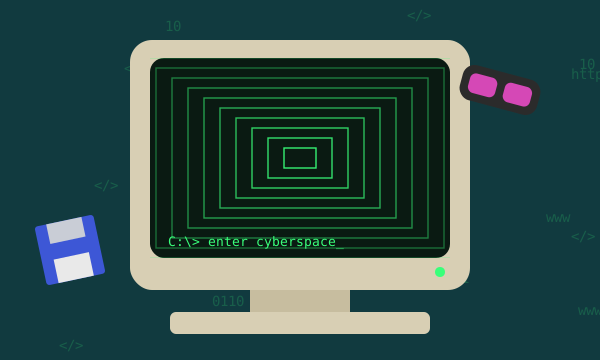
Then: A worldwide computer network that people "jack into", ruled by hackers and giant corporations.

Now: That's the internet, hackers and megacorps included. Plugging a cable into your skull is still limited to early medical trials of brain–computer interfaces.

Gibson reportedly wrote it on a typewriter, which makes it even more impressive.

Knight RiderTV series · 1982🎯 Nailed it

A talking car that drives itself

Then: KITT drives itself, chats with its owner and has plenty of opinions.

Now: Waymo's driverless robotaxis now give over 500,000 paid rides a week across 14 US cities, and in-car AI assistants will happily chat.

KITT had jokes. Robotaxis have "please fasten your seatbelt." Close enough.

Star Trek: The Next GenerationTV series · 1987🎯 Nailed it

Tablets and a universal translator

Then: The crew carry flat touch-screen "PADDs" and chat with aliens through instant translation.

Now: Tablets are everywhere, and phones and earbuds now translate conversations live.

Still waiting on the replicator. Tea, Earl Grey, hot.

The Terminator filmsFilms · 1984 & 1991🤦 Way off

Skynet, the AI that takes over

Then: A military AI called Skynet becomes self-aware in 1997 and turns on humanity.

Now: No Skynet. But AI safety is now a serious field, and in September 2026 AI company leaders asked the UN Security Council for global oversight.

We kept the anxiety and skipped the apocalypse. Let's keep it that way.

Beige boxes, dial-up squeals and the dream of cyberspace
1990s

As the internet crawled into homes at 56k, the '90s imagined virtual worlds, digital wallets and computers that knew everything. This decade has the best hit rate in our list, perhaps because the future it predicted was already loading.

Bill GatesBook · The Road Ahead, 1995🎯 Nailed it

The "wallet PC"

Then: Gates described a pocket device for messages, maps, schedules, e-tickets and digital money.

Now: That's the smartphone (2007), complete with boarding passes and tap-to-pay.

He predicted phones replacing wallets. He didn't predict us using them to watch cat videos in meetings.

The NetFilm · 1995🎯 Nailed it

Ordering pizza online

Then: Sandra Bullock orders a pizza over the internet, a scene presented as futuristic, geeky novelty.

Now: Food-delivery apps are now a multi-billion-dollar industry.

In 1995 this was a sci-fi thriller moment. Today it's Tuesday.

Total RecallFilm · 1990🎯 Nailed it

Robot taxis

Then: Arnold Schwarzenegger hails a "Johnny Cab", a driverless taxi steered by a grinning animatronic dummy.

Now: Driverless robotaxis are carrying passengers in more than a dozen US cities.

Real robotaxis sensibly skipped the creepy puppet.

Neal StephensonNovel · Snow Crash, 1992👌 Close-ish

The Metaverse

Then: Stephenson coined the word "Metaverse" for a shared virtual world where people meet as avatars.

Now: The word got so hot that Facebook renamed itself Meta in 2021. The actual metaverse… see the 2020s below.

Great word. Wrong decade.

Johnny MnemonicFilm · 1995, set in 2021👌 Close-ish

Brain storage and tech-overload disease

Then: A courier smuggles hundreds of gigabytes of data in his head, while people suffer a nervous disease caused by too much technology.

Now: A terabyte now fits on a fingernail-sized memory card. "Doomscrolling" isn't a disease, but it sure feels like one.

They got the burnout right and the hard drive wrong.

The SimpsonsTV · "Lisa's Wedding", 1995, set in 2010🎯 Nailed it

Video phone calls

Then: Future Marge chats with Lisa on a video phone, though she still uses a rotary dial.

Now: FaceTime launched in 2010, the very year the episode was set.

The Simpsons predicting the future is basically its own genre now.

Demolition ManFilm · 1993, set in 2032👌 Close-ish

Video calls, self-driving cars and swearing fines

Then: The future has video calls, autonomous cars, a machine that fines you for swearing, and only one restaurant chain left.

Now: Video calls and robotaxis are here, and automated content moderation is very real. There are still plenty of restaurants.

Six years to go, and still nobody knows how the three seashells work.

The Y2K bugNews headlines · 1999🤦 Way off

The millennium meltdown

Then: Planes would fall from the sky, banks would crash, and the power grid would fail at midnight on 1 January 2000.

Now: Almost nothing happened, largely because thousands of programmers spent years fixing old code first.

History's biggest non-event, and a triumph of boring, invisible work.

Glossy buttons, gesture screens and a robot in every home (eventually)
2000s

The 2000s future was shiny, blue and translucent. Hollywood hired real futurists, while tech moguls promised machines that would reshape cities. The results: some eerily accurate calls and one very famous two-wheeled disappointment.

Minority ReportFilm · 2002, set in 2054🎯 Nailed it

Ads that know exactly who you are

Then: Billboards scan Tom Cruise's eyes and greet him by name with personalised offers.

Now: Online ads know what you searched for five minutes ago, no eyeball scanning required.

They were 28 years early, and they didn't even need your eyeballs.

Minority ReportFilm · 2002👌 Close-ish

Waving your arms to control computers

Then: Tom Cruise conducts floating screens with sweeping hand gestures.

Now: Touch screens won. Hand-tracking exists in VR headsets, but nobody works like this all day.

Turns out holding your arms up for eight hours is a workout, not a workflow.

I, RobotFilm · 2004, set in 2035⏳ Jury's out

A humanoid robot in every home

Then: Friendly humanoid robots carry shopping, walk dogs and help around the house.

Now: Several companies are testing humanoid robots in factories and warehouses. Your home robot is still a vacuum that gets stuck under the sofa.

Nine years left. The vacuum is not confident.

WALL·EAnimated film · 2008👌 Close-ish

Humans glued to screens in floating chairs

Then: Future humans glide around on hover chairs, staring at screens, with everything delivered to them.

Now: Screens: absolutely. Delivery of everything: yes. Hover chairs: still an office chair with wheels.

Pixar was being gentle with us.

The SegwayTech hype · 2001👌 Close-ish

The machine that will reinvent cities

Then: Some famous tech investors predicted the Segway would be bigger than the internet, and that cities would be redesigned around it.

Now: Segway stopped making its original scooter in 2020. But shared e-scooters did take over city pavements.

The Segway lost. Its grandchild, the e-scooter, won.

Everything is an app, and the app wants to talk
2010s

By the 2010s the future felt close enough to touch, so the predictions got specific, with dates attached. That made them easy to check. Tech leaders promised self-driving cars and Mars, and one quiet romance film nailed the year 2025.

HerFilm · 2013, set in 2025🎯 Nailed it

Falling for your AI

Then: Theodore spends his days talking to Samantha, a warm, witty AI voice in his earpiece. His job is writing heartfelt letters on behalf of strangers.

Now: In 2025–26, voice AI holds natural, emotional conversations, and AI companion apps have millions of users. Writing heartfelt letters is now a thing AI does for free.

Spike Jonze got the year almost exactly right. The high-waisted trousers came back too.

University of Oxford studyResearch · "The Future of Employment", 2013🤦 Way off

Creative jobs will be the last to be automated

Then: An influential study found that jobs needing creativity and social intelligence were the safest from computers.

Now: Generative AI writes, draws, composes music and even makes whole animated films. Plumbers, meanwhile, remain very hard to automate.

The robots came for the poets before the plumbers. Nobody had that on their bingo card.

Elon MuskTech promise · 2016🤦 Way off

A cross-country self-driving drive by 2017

Then: A fully autonomous drive from Los Angeles to New York, with no hands on the wheel, by the end of 2017.

Now: That demo didn't happen on schedule. Truly driverless robotaxis arrived years later, led by Waymo.

Self-driving was always "two years away", until suddenly it wasn't.

Elon MuskTech promise · 2016🤦 Way off

Humans on their way to Mars by the mid-2020s

Then: The first crewed flight to Mars was targeted for 2024.

Now: Nobody has walked on the Moon since 1972, let alone Mars.

Mars is still there. It's very patient.

Google GlassProduct launch · 2013👌 Close-ish

Smart glasses on every face

Then: Glass would free us from staring down at phones.

Now: The consumer version flopped, and the name "Glasshole" entered the language. A decade later, camera-and-AI glasses are making a genuine comeback.

Right idea, ten years early, one unfortunate nickname.

AmazonAnnouncement · 2013👌 Close-ish

Drone delivery within five years

Then: Parcels would be dropped at your door by drones within about four or five years.

Now: Drone delivery exists in a limited number of areas. Most parcels still arrive in a van.

The future is here. It's just not evenly delivered.

Black Mirror, "Nosedive"TV · 2016👌 Close-ish

Rating everyone, all the time

Then: Every interaction gets a 1–5 star rating, and your average score decides where you can live and work.

Now: We rate drivers, restaurants, apps and each other's posts all day long. Thankfully, no single score runs your whole life.

Five stars for accuracy. One star for vibes.

Metaverse hype, NFT apes… and then AI changed everything
2020s

Our own decade made bold short-term predictions too, and we're already living in the results. Some aged in record time. Others were so late they're finally on time.

Gartner & MetaForecast · 2021–22🤦 Way off

A quarter of us in the metaverse daily by 2026

Then: Facebook renamed itself Meta in 2021, and Gartner forecast that 25% of people would spend at least an hour a day in the metaverse by 2026.

Now: Meta's VR division has lost more than $80 billion since 2020. In January 2026 it cut about 10% of the division's jobs and pivoted to smart glasses.

The avatars finally got legs in 2023, just in time for everyone to leave.

The NFT boomHype · 2021🤦 Way off

Digital collectibles are the future of ownership

Then: Cartoon ape pictures sold for millions, and NFTs were pitched as the future of art, games and ownership.

Now: Trading collapsed in 2022, and most NFTs are now worth very little.

Right-click, save as. Still free.

"The office is dead"Hot take · 2020👌 Close-ish

Everyone works from home forever

Then: The pandemic would end the office for good.

Now: Hybrid work became normal for many desk jobs, while plenty of companies called staff back three to five days a week.

The office isn't dead. It's just only busy on Tuesdays.

The robotaxi industryPromise · every year since ~2015🎯 Nailed it

"Driverless taxis next year"

Then: For roughly a decade, fully driverless taxis were always just around the corner.

Now: In 2026, Waymo alone gives over half a million paid rides a week in 14 US cities, with no one in the driver's seat.

The boy who cried robotaxi was eventually right.

The air-taxi industryPromise · early 2020s⏳ Jury's out

Flying taxis by 2026

Then: Electric air taxis would be carrying passengers over cities by the mid-2020s.

Now: Dubai opened the world's first certified commercial vertiport in 2026, with the first passenger services due to launch this year.

Blade Runner's flying cars: only seven years late, and only in Dubai (so far).

What we learned

Four lessons from 50 years of futures

We overestimate the short term and underestimate the long term

This is "Amara's Law", named after futurist Roy Amara. Robotaxis, video calls and smart glasses all arrived years after the hype said they would, but when they did arrive they were bigger than expected.

Bits beat atoms

Predictions about information (computers, networks, screens, AI) came true again and again. Predictions about moving heavy things (flying cars, space colonies, Mars) mostly didn't. Investor Peter Thiel's Founders Fund summed it up: "We wanted flying cars, instead we got 140 characters."

People predict gadgets, not habits

Nobody in 1985 imagined selfies, memes or doomscrolling. Back to the Future II predicted video calls but also a fax machine in every room. Technology is easier to imagine than what people will actually do with it.

Never put a brand in your future

Pan Am, Atari and the fax machine were all confidently placed in the future, and all disappeared or faded. If you're writing sci-fi, invent your logos.

Your turn

What will 2050 laugh at us for?

Today's AI hype will be someone's funny retro article one day. Write your own prediction for 2050, then see how it ages. Here's a prompt to get an AI assistant like Claude to play futurist with you:

🔮 Predict 2050
Act as a witty futurist. Describe an ordinary Tuesday in 2050 for a 30-year-old living in [your city]: morning routine, work, transport, food, entertainment and how they use AI. Then list 3 predictions you're confident about, 3 that are long shots, and 1 prediction that people in 2050 will find hilarious.

Want to go further? Turn your 2050 story into an animated short with MagicLight AI. See our MagicLight review for how it works.

Discussion

What do you think?

Nova asks

Which prediction surprised you most? Which verdict would you change? And what's your bold call for 2050? I read every comment.

No account needed. Please keep it friendly: spam, abuse and personal information will be removed. We store the name and comment you post. We never ask for your email, and we don't store IP addresses, only a scrambled one-way code used to stop spam. See our comment policy.